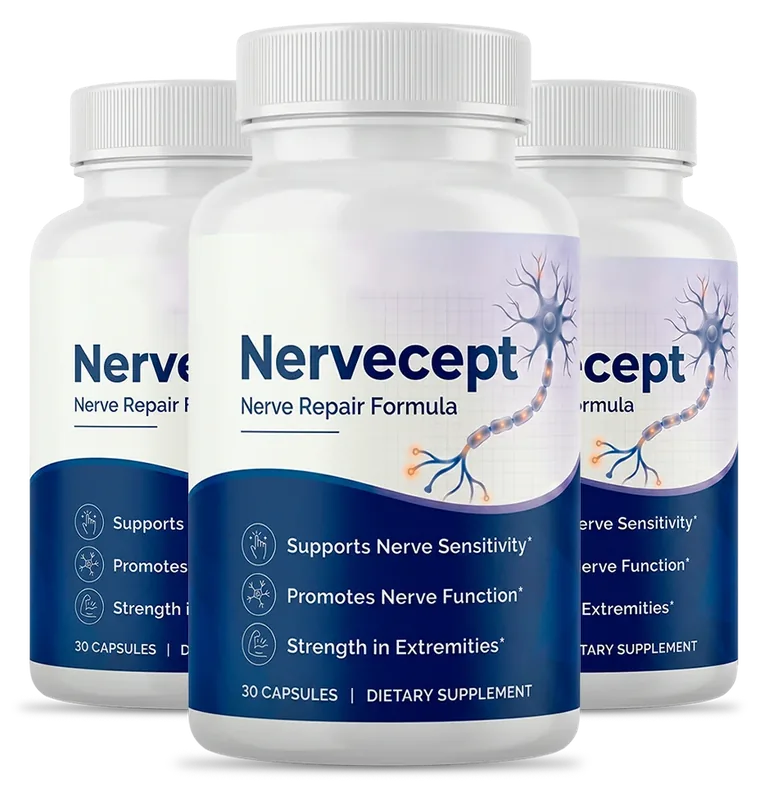
Official product information
Nervecept Label Amount vs Studied Dose: The Full Comparison
Nervecept label amount vs studied dose: no line reaches the daily dose used in research. Glucosamine is closest at 33% of 1,500 mg. Six other lines are under 7%, and bromelain has no studied dose to compare. The studies tested these ingredients alone, mostly in knee osteoarthritis, never the capsules.
Written by the Nervecept label deskUpdated
The comparison01
What does Nervecept label amount vs studied dose mean?
Nervecept label amount vs studied dose compares what one capsule lists with the daily amount researchers gave people in published studies of the same ingredient.
Every Nervecept line prints an amount, so the comparison is possible. We divide each amount by the low end of a studied daily dose and call the result the share.
The studies tested these ingredients alone, not Nervecept, and nearly all looked at joints, not nerves.
Why do it? A label can list a well-studied ingredient at a small fraction of the tested dose. Seeing the share lets you judge that for yourself. It does not tell you the capsule fails, and it does not tell you it works. It only shows scale. The label dose is one capsule a day, so the per-capsule figure is also the daily figure. The Supplement Facts page shows the label itself.
The bars02
Is Nervecept at a studied dose?
No. No Nervecept line reaches the daily dose used in research. Glucosamine is closest at 500 mg, a third of the 1,500 mg a day in the GAIT trial.
Six other lines are under 7% of their yardstick. Bromelain has no studied dose on the source we checked, so it shows n/a.
The method03
How is the share of the studied dose calculated?
The share is the label amount per capsule divided by the low end of the studied daily dose, times 100. For glucosamine, 500 divided by 1,500 is one third, or 33%.
We use the low end so the number is as generous to the capsule as the source allows.
| Line | Sum | Share | Yardstick source |
|---|---|---|---|
| Glucosamine sulfate | 500 / 1,500 mg | 33% | GAIT knee trial (NIH, GAIT Trial News Release) |
| Indian frankincense | 67 / 1,000 mg | 6.7% | Extract, up to 6 months (NCCIH, Boswellia) |
| Chondroitin sulfate | 50 / 1,200 mg | 4.2% | GAIT knee trial (NIH, GAIT Trial News Release) |
| Turmeric root | 50 / 1,500 mg | 3.3% | Curcumin review, top dose (Zeng et al., Front Immunol 2022) |
| Quercetin | 8 / 500 mg | 1.6% | One small safety trial (Han et al., BMJ Open Resp Res 2020) |
| Methionine | 8 / 357 mg | 2.2% | Our 70 kg illustration (Paoletti et al., Nutrients 2023) |
| MSM | 8 / 3,375 mg | 0.24% | One small knee trial (Debbi et al., BMC CAM 2011) |
| Bromelain | 8 / none found | n/a | No dose given (NCCIH, Bromelain) |
The curcumin row uses the top dose, 1,500 mg. Against the lowest, 120 mg, the turmeric share would be 42%, though only if all 50 mg of root were curcumin, which it is not. (Zeng et al., Front Immunol 2022)
The extremes04
Why is glucosamine the closest, and why is bromelain n/a?
Glucosamine is closest because the label gives it 500 mg, the largest line, while the GAIT trial used 1,500 mg. Bromelain is n/a because no dose was found on the source we checked.
Closest in size does not mean effective. In that trial, glucosamine did not beat placebo overall for knee pain. (NIH, GAIT Trial News Release)
For bromelain, the NCCIH page gives no dose and names no interactions, so we avoid guessing either. (NCCIH, Bromelain)
Closest: glucosamine
A third of the studied dose. It is also the line that brings the shellfish allergen, so the closest match is also the line with the most cautions.
Furthest: MSM
0.24% of the 3,375 mg a day used in one small trial. The capsule holds about 1 part in 420 of that dose.

Nervecept: from $49 a bottlePacks of 2, 3 or 6 bottles · 30 capsules each · refund window 60 days
See packsOne yardstick explained05
Where does the 357 mg of methionine come from?
The 357 mg of methionine is our own calculation: the pooled minimum requirement of 5.1 mg per kilogram a day, multiplied by 70 kg.
The paper measured healthy adults aged 60 and older. It is a nutritional minimum, not a trial dose and not a recommendation. (Paoletti et al., Nutrients 2023)
Different body weights give different numbers. At 60 kg the same math gives about 306 mg, and at 80 kg about 408 mg. Eight milligrams stays a small fraction either way. The sales page says methionine is an essential amino acid. That is true, and food supplies most of it. (Nervecept sales page)
Limits06
Are the studied-dose yardsticks fair?
Only roughly. The yardsticks mix herb against extract, root against curcumin, and a safety trial against a benefit trial, so they show scale, not effect.
Three are single small trials or a tiny sample: quercetin (9 people), MSM (49 people) and the curcumin absorption test (3 volunteers). We call each one small. (Han et al., BMJ Open Resp Res 2020) (Debbi et al., BMC CAM 2011) (Khajeh pour et al., Food Sci Nutr 2023)
The capsules themselves have not been tested in any trial we found.
It cannot say whether a low dose does something, whether the ingredients act together, or whether the capsule helps any nerve condition. No supplement treats neuropathy. See how it works and claims vs evidence for the sales-page wording.
What next07
What should you do with these numbers?
Use them to set expectations, then ask a clinician about safety. The label dose is one capsule daily, and it says not to exceed the recommended dose.
Shellfish allergy, blood thinners, diabetes medicines, coming surgery, pregnancy and age under 18 are the reasons to ask first. Keep taking prescribed medicine exactly as directed.
- Read each ingredient page for its cautions: start with glucosamine and chondroitin.
- Tell your pharmacist about every supplement. (NCCIH, Using Supplements Wisely)
- Weigh the price against the evidence. Pricing lists the packs we read on October 18, 2026.
FAQ08
What do people ask about label amount vs studied dose?
A common question first: Is Nervecept at a studied dose? It and 5 more are answered below.
Every answer gives the short reply first and the reasoning after, with a source when we have one.
Is Nervecept at a studied dose?
No, not for any line. Glucosamine is closest at 500 mg against 1,500 mg a day in the GAIT trial. The other lines hold 0.24% to 6.7% of the studied amount, and bromelain has none to compare. The capsules themselves were never tested. (NIH, GAIT Trial News Release)
How is the share calculated?
We divide the label amount per capsule by the low end of the studied daily dose, then multiply by 100. For chondroitin, 50 mg divided by 1,200 mg is about 4.2%. At one capsule a day, per capsule equals per day.
Why is glucosamine the closest?
Because the label gives it 500 mg, ten times the chondroitin line, while the GAIT trial used 1,500 mg. That makes a third. It is closest in size, which says nothing about whether it works. (NIH, GAIT Trial News Release)
Why is bromelain n/a?
The NCCIH bromelain page we cite names no dose, and we found no other verified source for one. A share needs a number to divide by, so we show n/a rather than invent a figure. (NCCIH, Bromelain)
Where does 357 mg of methionine come from?
It is our own calculation. A pooled minimum requirement of 5.1 mg per kilogram a day, multiplied by 70 kg, gives about 357 mg. It is an illustration for one body weight, not a recommendation. (Paoletti et al., Nutrients 2023)
Are the yardsticks fair?
Only roughly. Some are herb against extract, root against curcumin, or a safety trial against a benefit trial. They show scale, not effect. Each one is labeled on the table so you can judge it. (NCCIH, Turmeric) (NCCIH, Boswellia) (Han et al., BMJ Open Resp Res 2020)
Who wrote this09
Who is behind this Nervecept write-up?
The Nervecept label desk drafted it from the bottle, the sales page and the public sources linked in the text.
Once a clinician has reviewed it, the reviewer's name appears in the box below.
Drafted from the bottle, the sales page and the NIH, FDA, CDC, FTC and journal sources named in the text.
Most recent update: . How we work is set out in the editorial standards and the review rules. This website belongs to a USA authorized Nervecept retailer. It is neither the maker of the capsules nor the distributor named on the label. Purchases made through our order links earn us a commission.
Keep reading
Where should you go next with Nervecept?
Three good next stops are ingredients, supplement facts, how it works.
They build on what you just read and cite their own sources.


USA Authorized Nervecept Retailer
Ready to try Nervecept?
Read the label, the shellfish line and your own medicine list first. Then choose a pack: the bigger ones cost less per bottle and ship free inside the US, and the 60-day refund clock starts on the purchase date.
- You check out on the sales page
- Refund window: 60 days
- US shipping is included on 3 or 6 bottles