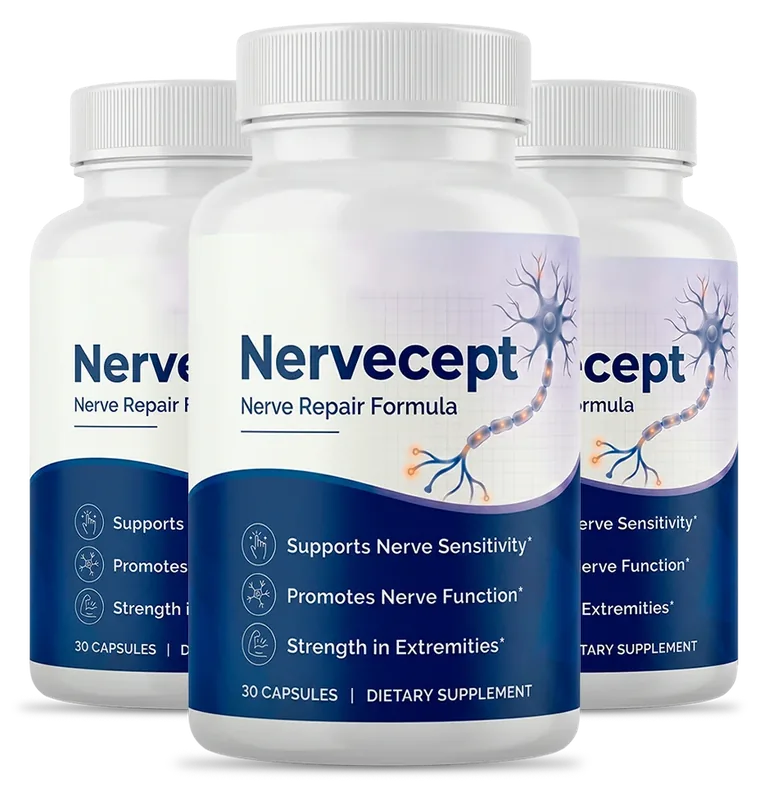
Official product information
Editorial Standards: How the Nervecept Label Desk Works
Our Nervecept editorial standards put the bottle label first, the sales page second and public health sources third. Sales claims appear only in quotation marks, dose comparisons show their math, mistakes are fixed in the open, and no one pays for a review. Where evidence is missing, we say so.
Written by the Nervecept label deskUpdated
Method01
How do you fact-check Nervecept pages?
Our Nervecept editorial standards start with the bottle. We check each product fact against the label first, then the sales page, then public health sources.
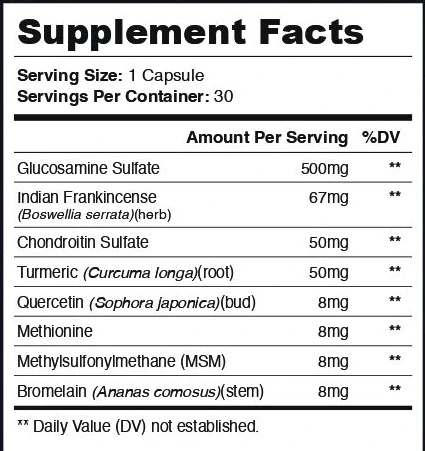
If two of them disagree, the label wins. The label prints a dose of one capsule a day and an amount for each of eight lines, and the sales page agrees on supply.
Every statement that rests on research carries a numbered source beside it.
Read the label
Amounts, directions, warnings, allergen line and distributor, copied as printed.
Read the sales page
Prices, guarantee terms and claims, with the date we read them. (Nervecept sales page)
Add public sources
NIH, FDA, CDC and FTC pages and published papers, read in full before use.
State the gaps
If no trial of the capsules exists, or a source gives no dose, the page says so.
Sources02
Which sources do you trust?
We trust government health agencies and published trials, and we name them in the text. We treat the sales page as a claim to check, not as evidence.
Each source we cite was read, and each number comes from what the source says. One source may only back one kind of statement.
The table shows what each kind of source can support.
| Source | Used for | Not used for |
|---|---|---|
| Bottle label | Amounts, dose, allergen, distributor | Proof of benefit |
| Sales page | Prices, guarantee, quoted claims | Health facts |
| NIH and NCCIH pages | Ingredient evidence and cautions | Doses a page does not give |
| FDA, FTC | Regulation, allergens, advertising rules | Ingredient benefit |
| Published trials | Studied doses and results | Claims beyond the trial |
A few limits are built in. One agency page may give no dose, so we do not invent one. A trial of knee arthritis is not a trial of nerves, so we never present it as one. The FDA does not approve supplements before they are sold, and we avoid language that suggests otherwise. (FDA, Report a Supplement Problem)
Claims03
How do you handle sales-page claims?
We quote each sales-page claim exactly, inside quotation marks, and put the evidence next to it. We do not repeat a claim as fact, and we do not leave it out.
The label desk read the sales page on October 18, 2026. Its biggest promises about nerve pain and regeneration are not supported by any trial of Nervecept that we found.
The label itself is far more modest and carries the FDA statement.
What we do
- Quote the words exactly.
- Name the source of the evidence.
- Say when no trial exists.
What we never do
- Say the capsules treat neuropathy.
- Print a star score or a customer quote we cannot verify.
- Invent a study.
Why quote at all? Readers deserve to see what was promised. FTC guidance says a testimonial does not replace scientific evidence, and a disclaimer does not repair a misleading claim. (FTC, Health Products Compliance Guidance) Our claims versus evidence page sets the main sales-page promises beside the research.
Dose math04
How are dose comparisons made?
We divide the amount on the label by the low end of the daily dose used in research. The result is a share, such as 33% for glucosamine against the 1,500 mg in the GAIT trial.
It is a scale check. A small share does not prove failure, and a big one does not prove benefit.
We also say when the yardstick is loose, as with an herb against an extract.
| Line | Label | Yardstick | Share |
|---|---|---|---|
| Glucosamine sulfate | 500 mg | 1,500 mg a day (NIH, GAIT Trial News Release) | 33% |
| Chondroitin sulfate | 50 mg | 1,200 mg a day (NIH, GAIT Trial News Release) | 4.2% |
| Methionine | 8 mg | 357 mg, our math (Paoletti et al., Nutrients 2023) | 2.2% |
The methionine yardstick shows how we handle our own numbers. The paper gives a minimum of 5.1 mg per kilogram a day. For a 70 kg adult, that is about 357 mg. We label it as our illustration, not a recommendation. Bromelain gets no ratio at all, because the source we checked names no dose. (NCCIH, Bromelain)
See every row on label amount versus studied dose.
Wording05
How do you describe small studies?
We describe a small study as small. A single trial is called “one small trial”, never “studies show”.
The quercetin safety trial had 9 people, and the MSM knee trial had 49. Both are named that way. (Han et al., BMJ Open Resp Res 2020) (Debbi et al., BMC CAM 2011)
We also separate safety from benefit, and knees from nerves.
One trial gets one verb: it found, it tested, it reported. We write “may” when evidence is early and “no trial found” when we found none.
Where a source adds a caveat, such as the MSM authors calling the gains small, we repeat it. (NCCIH, Boswellia)
Corrections06
How are corrections handled?
We correct errors in the open. Someone checks the report against the label and the cited source, fixes the page and updates the date shown on it.
Send a note with the page and the sentence to [email protected], open Monday to Friday, 9:00am to 5:00pm ET.
The website inbox cannot see orders. For tracking or a refund on an order you have placed, call +1 (302) 200-3480.
Report
Name the page and the sentence.
Check
We compare it with the label and the source.
Fix
If wrong, we correct the text.
Date
The updated date changes on the page.
Independence07
Do you take payment for reviews?
No. Nobody pays Nerve-cept.org for a review, a rating or a softer caution. We do earn a commission when readers order through our links.
Because that is a stake in the outcome, we publish no star score or customer quote until a real one is verified. The FTC bans fake and bought reviews. (FTC, Final Rule on Fake Reviews)
Compare several sources and be wary of bursts of reviews. (FTC, Spotting Fake Reviews)
This site belongs to a USA authorized Nervecept retailer. It is not the manufacturer or the distributor named on the label. About us explains how it earns money.
Reviewer policy08
How does the medical reviewer slot work?
Each health page has a fill-in slot for a medical reviewer. The slot stays blank until a real, named review is on file.
We never print a name, degree or date we cannot back up. Until a review exists, we claim no medical sign-off.
When one is added, the name, credentials and date show on the page and in the bar at the bottom.
| Name | Printed only after a review is confirmed |
|---|---|
| Credentials | Printed only when we can state them truthfully |
| Date | The date of that review, not of our last edit |
| Scope | Cautions, dose notes and source reading, not a product endorsement |
A reviewer does not make a supplement a treatment. Neither does a page. Nervecept is a dietary supplement, and the label says it is not intended to diagnose, treat, cure or prevent any disease. Keep taking prescribed medicine and talk to your own clinician. (NIH ODS, Supplements: What to Know)
FAQ09
What do people ask about editorial standards?
A common question first: How do you fact-check Nervecept pages? It and 6 more are answered below.
Every answer gives the short reply first and the reasoning after, with a source when we have one.
How do you fact-check Nervecept pages?
We check every product fact against the bottle label first, then the sales page, then public health sources. If they disagree, the label wins. Each page cites its sources next to the statement they support, so you can check our work.
Which sources do you trust for health facts?
We rely on government health agencies, such as NIH, FDA, CDC and FTC, and on published trials. We name each one in the text. We do not use the sales page, reviews or forum posts as proof that an ingredient works. (NIH ODS, Supplements: What to Know)
How do you handle sales-page claims?
We quote them exactly, inside quotation marks, and set the evidence beside them. We never repeat a claim such as nerve regeneration as fact. The FTC expects health claims to rest on competent and reliable scientific evidence. (FTC, Health Products Compliance Guidance)
How are dose comparisons made?
We divide the label milligrams by the low end of a studied daily dose, and show the result as a share. For example, 8 mg against 357 mg is about 2.2%. These are scale checks, and we say where the yardstick is loose.
How are corrections handled?
We check the report against the label and the cited source, fix the page if it is wrong, and update the date shown on it. Send a note to [email protected] with the page and the sentence. Order problems go to the order desk.
Do you take payment to change a page?
No. Nobody pays for a review, a rating or a changed caution. We earn a commission on orders placed through our links, and we disclose it on every page. The FTC rule on fake reviews bans buying and selling reviews. (FTC, Final Rule on Fake Reviews)
Why are some phrases in quotation marks?
Quotation marks mark words that come from the bottle or the sales page, not from us. “Nerve Repair Formula” is printed on the label, for example. Putting such words in quotes reports them without agreeing with them.
Who wrote this10
Who is behind this Nervecept write-up?
The Nervecept label desk drafted it from the bottle, the sales page and the public sources linked in the text.
Once a clinician has reviewed it, the reviewer's name appears in the box below.
Drafted from the bottle, the sales page and the NIH, FDA, CDC, FTC and journal sources named in the text.
Most recent update: . How we work is set out in the editorial standards and the review rules. This website belongs to a USA authorized Nervecept retailer. It is neither the maker of the capsules nor the distributor named on the label. Purchases made through our order links earn us a commission.
Keep reading
Where should you go next with Nervecept?
Three good next stops are about us, reviews, testing & quality.
They build on what you just read and cite their own sources.



USA Authorized Nervecept Retailer
Ready to try Nervecept?
Read the label, the shellfish line and your own medicine list first. Then choose a pack: the bigger ones cost less per bottle and ship free inside the US, and the 60-day refund clock starts on the purchase date.
- You check out on the sales page
- Refund window: 60 days
- US shipping is included on 3 or 6 bottles