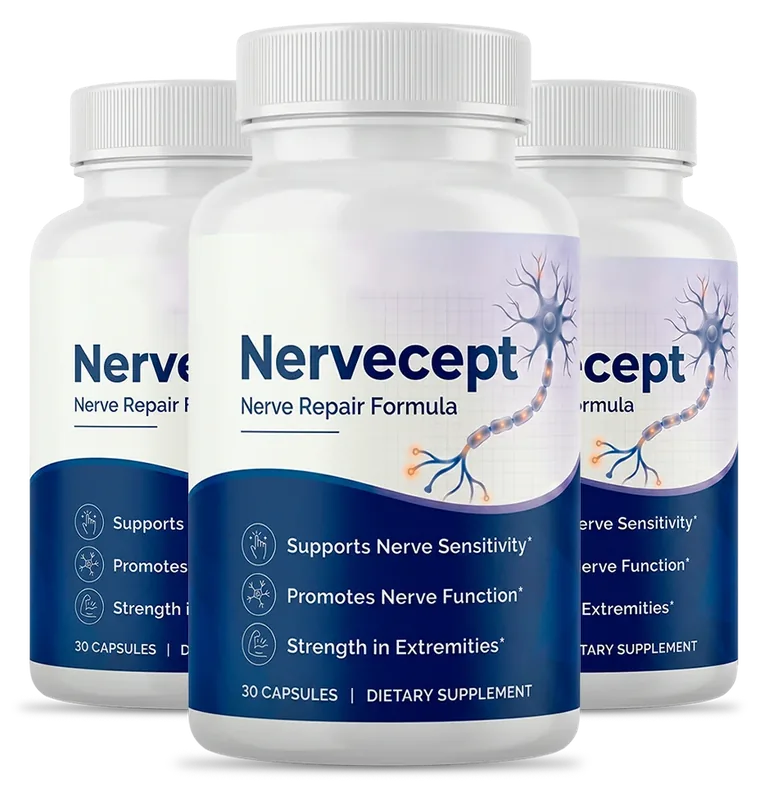
Official product information
Frankincense and Turmeric in Nervecept: 67 mg and 50 mg Per Capsule
Frankincense and turmeric in Nervecept are 67 mg of Boswellia serrata herb and 50 mg of turmeric root per capsule, one capsule a day. Studies used up to 1,000 mg a day of Boswellia extract and 120 to 1,500 mg a day of curcumin. The capsule holds a small share of each, and the trials were about joints.
Written by the Nervecept label deskUpdated
Lines 2 and 4 of 801
What are frankincense and turmeric in Nervecept?
Frankincense and turmeric in Nervecept are two plant lines: 67 mg of Indian frankincense (Boswellia serrata, herb) and 50 mg of turmeric (Curcuma longa, root) in each capsule.
Boswellia comes from the resin of a tree and turmeric from the root of Curcuma longa. Both are traditional botanicals.
The sales page describes them with inflammation-balance wording. We quote the facts below, not that wording.
The label writes the first line as “Indian Frankincense (Boswellia serrata)(herb)” and the second as “Turmeric (Curcuma longa)(root)”. Neither is called an extract, and neither lists an active compound such as boswellic acids or curcuminoids. That detail drives most of the dose math that follows. (Nervecept sales page) The full panel is on the Supplement Facts page.
Dose check02
How much frankincense and turmeric is in Nervecept compared with studies?
Frankincense and turmeric in Nervecept come to 67 mg and 50 mg a day. Studies used up to 1,000 mg of Boswellia extract and 120 to 1,500 mg of curcumin a day.
That puts the frankincense line at 6.7% of 1,000 mg and the turmeric line at 3.3% of 1,500 mg. These studies tested the ingredients alone, not Nervecept.
| Name on the label | Indian Frankincense (Boswellia serrata)(herb) |
|---|---|
| What it is | Boswellia serrata resin tree; the label says herb |
| Amount per capsule | 67 mg per capsule |
| Amount used in research | Up to 1,000 mg a day of extract for up to 6 months |
| Label share of that amount | 6.7% of the 1,000 mg a day of extract studied |
| Strength of evidence | Small, low-quality studies; some suggest less osteoarthritis pain |
| Marketed or traditional use | Traditional resin used for comfort |
| Main caution | Little known in pregnancy or breastfeeding; talk to a provider if you take medicine. |
| Note | The label says herb, not extract, so the yardstick is only a rough guide. |
| Name on the label | Turmeric (Curcuma longa)(root) |
|---|---|
| What it is | Curcuma longa root |
| Amount per capsule | 50 mg per capsule |
| Amount used in research | 120-1,500 mg a day of curcumin in arthritis trials |
| Label share of that amount | 3.3% of 1,500 mg (42% of the lowest dose, 120 mg) |
| Strength of evidence | Early positive signs in osteoarthritis, limited by small low-quality trials |
| Marketed or traditional use | Kitchen spice and traditional root |
| Main caution | Liver injury reported with highly bioavailable curcumin; stomach upset. No piperine is listed and curcuminoid content is not stated. |
| Note | Root powder is not the same as the curcumin extracts used in trials. |
The label says herb and root, while the trials used extracts and curcumin. If all 50 mg of turmeric root were curcumin, which it is not, the capsule would still reach only 42% of the lowest studied dose, 120 mg. See label amount vs studied dose for the method.
Research03
What does the research say about Boswellia?
Most Boswellia studies are small and low quality, and NCCIH says there is not enough high-quality evidence that it helps any health condition. (NCCIH, Boswellia)
Several oral studies in osteoarthritis suggest it may reduce inflammation and pain. Doses were up to 1,000 mg a day of extract for up to 6 months, and 2,400 mg a day for up to 1 month.
Oral Boswellia is likely safe at those doses, per NCCIH. Little is known about medicinal amounts in pregnancy or breastfeeding, and the page advises talking to a provider if you take medication. (NCCIH, Boswellia) We found no trial in nerve conditions.
Research04
What dose of curcumin was studied, and is turmeric root the same?
A review of 29 arthritis trials, with 2,396 people, used 120 to 1,500 mg of curcumin a day for 4 to 36 weeks. Turmeric root is not the same thing as curcumin.
In osteoarthritis, curcumin lowered pain scores against placebo (6 studies, 431 people), but results varied a lot and the trials were small. (Zeng et al., Front Immunol 2022)
Adverse events did not differ significantly from placebo in that review.
| Topic | What the source says |
|---|---|
| Osteoarthritis evidence | Initial evidence is positive, but higher-quality evidence is needed (NCCIH, Turmeric) |
| Absorption | Oral curcumin is poorly absorbed. In one small trial of 3 volunteers, black pepper raised its half-life from 2.2 to 4.5 hours, a preliminary result (Khajeh pour et al., Food Sci Nutr 2023) |
| Common side effects | Nausea, vomiting, acid reflux, stomach upset, diarrhea or constipation (NCCIH, Turmeric) |
| Rare serious effect | Liver injury with highly bioavailable curcumin products (NCCIH, Turmeric) |
No piperine is listed on the Nervecept label. Whether that matters for a root powder at 50 mg is unknown.

Nervecept: from $49 a bottlePacks of 2, 3 or 6 bottles · 30 capsules each · refund window 60 days
See packsCautions05
Does turmeric interact with blood thinners, and who should be careful?
The NCCIH pages we cite name no blood thinner interaction for turmeric or Boswellia, but they advise talking to a provider before use if you take medicine. (NCCIH, Turmeric) (NCCIH, Boswellia)
Nervecept also holds glucosamine and chondroitin, which have been linked to more bleeding risk with warfarin, so the whole capsule needs the question. (NCCIH, Glucosamine and Chondroitin)
Keep taking prescribed medicine exactly as directed. A supplement is no reason to stop or change it.
Fatigue, nausea, poor appetite, dark urine or yellow skin or eyes need a doctor right away. NCCIH links these to liver damage reported with bioavailable curcumin products. (NCCIH, Turmeric)
- On a blood thinner or diabetes medicine: ask your pharmacist first.
- Surgery coming: tell the surgeon and anesthesia team about every supplement. (NCCIH, Using Supplements Wisely)
- Pregnant, nursing or under 18: the label asks you to consult a physician.
The side effects page covers the whole label.
Nerve claims06
Do frankincense and turmeric help nerves?
We found no trial of frankincense or turmeric in a nerve condition. Their studies looked at joints, mostly knees, and no supplement treats neuropathy.
The sales page says the formula can “promote neural regeneration during deep sleep”. No source we cite supports that sentence for any ingredient. (Nervecept sales page)
Where do the capsules fit, then? They suit a reader who wants small amounts of two traditional botanicals and accepts that the research is about joints. They do not suit someone hoping to replace care for numbness or tingling. See neuropathy basics for when to call a doctor. (NINDS, Peripheral Neuropathy)
Before you buy07
What should you know before taking frankincense and turmeric in Nervecept?
Know three things: the amounts are small next to studied doses, the label gives herb and root rather than extracts, and no trial tested the capsules.
The label dose is one capsule daily with 8 oz of water, and it says not to exceed the recommended dose.
How to take Nervecept covers timing. Pricing lists the packs we read on October 18, 2026, with a 60-day money-back guarantee.
See Nervecept on the sales pageFAQ08
What do people ask about boswellia and turmeric?
A common question first: How much frankincense is in Nervecept? It and 5 more are answered below.
Every answer gives the short reply first and the reasoning after, with a source when we have one.
How much frankincense is in Nervecept?
Each Nervecept capsule lists 67 mg of Indian frankincense (Boswellia serrata), labeled as herb. At one capsule a day that is 67 mg daily, about 6.7% of the 1,000 mg a day of extract used in studies. (NCCIH, Boswellia)
What is Boswellia serrata?
Boswellia serrata is a tree whose resin is sold as Indian frankincense. Studies used extracts of it, mostly in osteoarthritis. NCCIH calls those studies small and low quality, with not enough evidence that it helps any health condition. (NCCIH, Boswellia)
How much turmeric is in Nervecept?
Each capsule lists 50 mg of turmeric (Curcuma longa) root. The label gives no curcumin or curcuminoid amount and no piperine line, so the curcumin in a capsule is only a fraction of those 50 mg.
What dose of curcumin was studied?
A review of 29 arthritis trials used 120 mg to 1,500 mg of curcumin a day for 4 to 36 weeks. It found early signs of benefit but called the trials small and low quality. (Zeng et al., Front Immunol 2022)
Does turmeric interact with blood thinners?
The NCCIH turmeric page we cite names no blood thinner interaction. It does advise talking to a provider before using any herbal product if you take medicine, and the label has no turmeric warning. Ask your pharmacist if you take warfarin. (NCCIH, Turmeric) (NCCIH, Using Supplements Wisely)
Is turmeric root the same as curcumin?
No. Curcumin is one active compound within turmeric root. The trials used curcumin products, while the label lists root powder with no curcuminoid amount, so trial doses cannot be compared one for one. (Zeng et al., Front Immunol 2022)
Who wrote this09
Who is behind this Nervecept write-up?
The Nervecept label desk drafted it from the bottle, the sales page and the public sources linked in the text.
Once a clinician has reviewed it, the reviewer's name appears in the box below.
Drafted from the bottle, the sales page and the NIH, FDA, CDC, FTC and journal sources named in the text.
Most recent update: . How we work is set out in the editorial standards and the review rules. This website belongs to a USA authorized Nervecept retailer. It is neither the maker of the capsules nor the distributor named on the label. Purchases made through our order links earn us a commission.
Keep reading
Where should you go next with Nervecept?
Three good next stops are ingredients, supplement facts, side effects.
They build on what you just read and cite their own sources.



USA Authorized Nervecept Retailer
Ready to try Nervecept?
Read the label, the shellfish line and your own medicine list first. Then choose a pack: the bigger ones cost less per bottle and ship free inside the US, and the 60-day refund clock starts on the purchase date.
- You check out on the sales page
- Refund window: 60 days
- US shipping is included on 3 or 6 bottles